At Ocala Plastic Surgery & Dermatology, skin cancer care is provided by Dr. Jessin Blossom, a Board-Certified Dermatologist and Mohs Surgeon who completed her dermatology and Mohs surgery training at the University of Arizona. Her training in dermatologic surgery and cutaneous oncology helps patients receive informed evaluation and treatment.
Recognizing common skin cancer symptoms is an important step toward seeking care promptly.
What Changes In A Mole May Indicate Skin Cancer?
A mole or pigmented spot that changes over time may require evaluation. Changes in size, shape, color, or texture can be warning signs of skin cancer.
The ABCDE guidelines can help identify concerning features:
- Asymmetry, when one half does not match the other
- Borders that appear irregular, blurred, or uneven
- Color variations within the same spot
- Diameter that is larger than a pencil eraser
- Evolving size, shape, color, or symptoms
Any mole that looks noticeably different from others should also be examined.
Can A Sore That Does Not Heal Be Skin Cancer?
A sore that repeatedly crusts, bleeds, or fails to heal within several weeks may be a sign of skin cancer. These lesions can appear to improve temporarily before opening again.
Nonhealing sores are commonly found on areas that receive frequent sun exposure, including the face, ears, scalp, neck, hands, and forearms. A persistent wound should not be dismissed as a minor irritation.
What Do Skin Cancer Growths Look Like?
Skin cancer does not always begin as a mole. It may appear as a new growth, a rough patch, a shiny bump, or a scaly area that slowly enlarges.
Other skin cancer symptoms may include:
- Persistent itching, tenderness, or pain
- Bleeding without a clear injury
- A pearly, waxy, or translucent bump
- A red or brown scaly patch
- A firm growth that develops a crusted surface
Because these changes may resemble harmless skin conditions, a dermatologist should provide an accurate diagnosis.
Who Should Schedule A Skin Cancer Screening?
Anyone with a suspicious or changing lesion should schedule a skin examination. Regular skin checks are particularly important for patients with higher risk factors, including extensive sun exposure, fair skin, multiple moles, or a personal or family history of skin cancer.
Early evaluation can help determine whether monitoring, biopsy, or treatment is needed.
Schedule A Skin Cancer Evaluation In Ocala, FL
Skin changes should be taken seriously when they persist, evolve, or appear unusual.
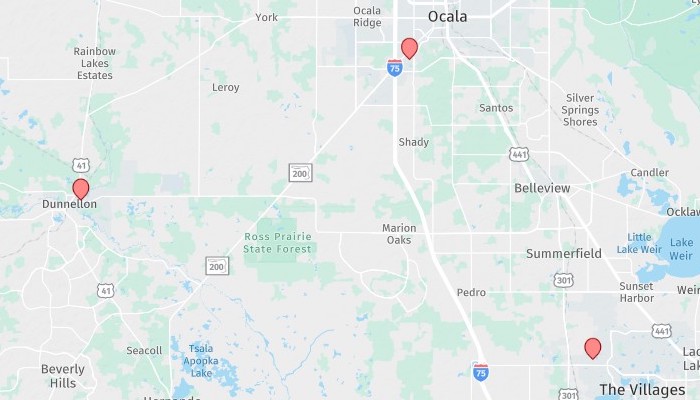
To schedule an evaluation with Dr. Jessin Blossom at Ocala Plastic Surgery & Dermatology, call the Ocala office at 352-415-3868, The Villages office at 352-415-3871, or the Dunnellon office at 352-415-3883.